
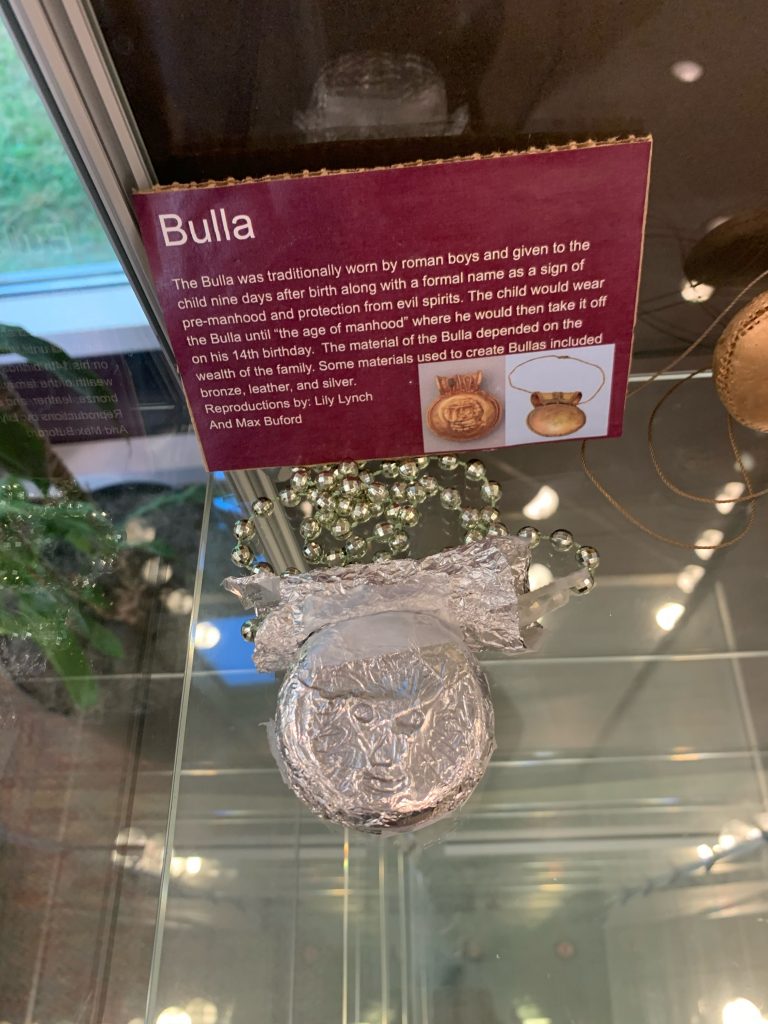
The Bulla was traditionally worn by roman boys and given to the child nine days after birth along with a formal name as a sign of pre-manhood and protection from “evil spirits.” Girls did not often participate in the wearing and tradition of the Bulla, however, the practice was slightly more common in more prosperous families. The material of the Bulla depended on the wealth of the family, and a gold bulla was a sign of great affluence. Some other materials used to make Bullas included bronze, leather, and silver. Although the Bullas were often made of semi-precious metals, they were hollow and were not seen as heavy or uncomfortable, suitable for a child.
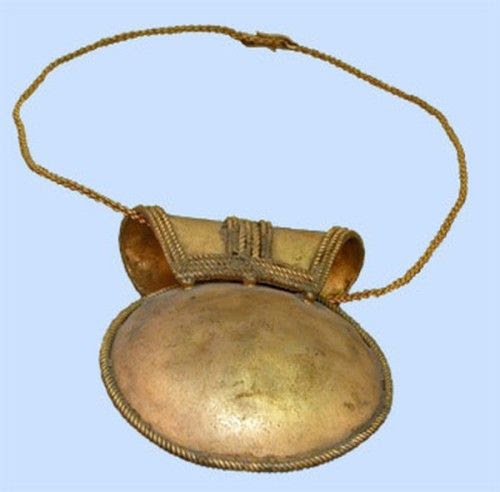
The child would wear the Bulla until “the age of manhood” where he would then take it off on his 14th birthday. This day was almost always before a man’s wedding day but in the cases in which girls would wear them, they would ceremoniously take it off and place it in the family’s lararium, the space of worship where the altar was kept. This taking off of the Bulla was part of a bigger ceremony in which she would also place some of her childhood things by the altar as a way of religiously letting go of her past as a child and become a woman.

Sources:
http://www.vroma.org/~bmcmanus/clothing.html
https://archaeologicalmuseum.jhu.edu/the-collection/object-stories/archaeology-of-daily-life/jewelry/gold-bulla/
https://en.wikipedia.org/wiki/Bulla_(amulet)
https://en.wikipedia.org/wiki/Bulla_(amulet)